Fewer than 100 in the Red Sea
Every sighting counts.
DugongWatch turns every sighting into a contribution to science and protection. Report your dugong sighting, upload a photo or video – and help protect the last sea cows of the Red Sea.
About DugongWatch
Dive in. Make a difference.
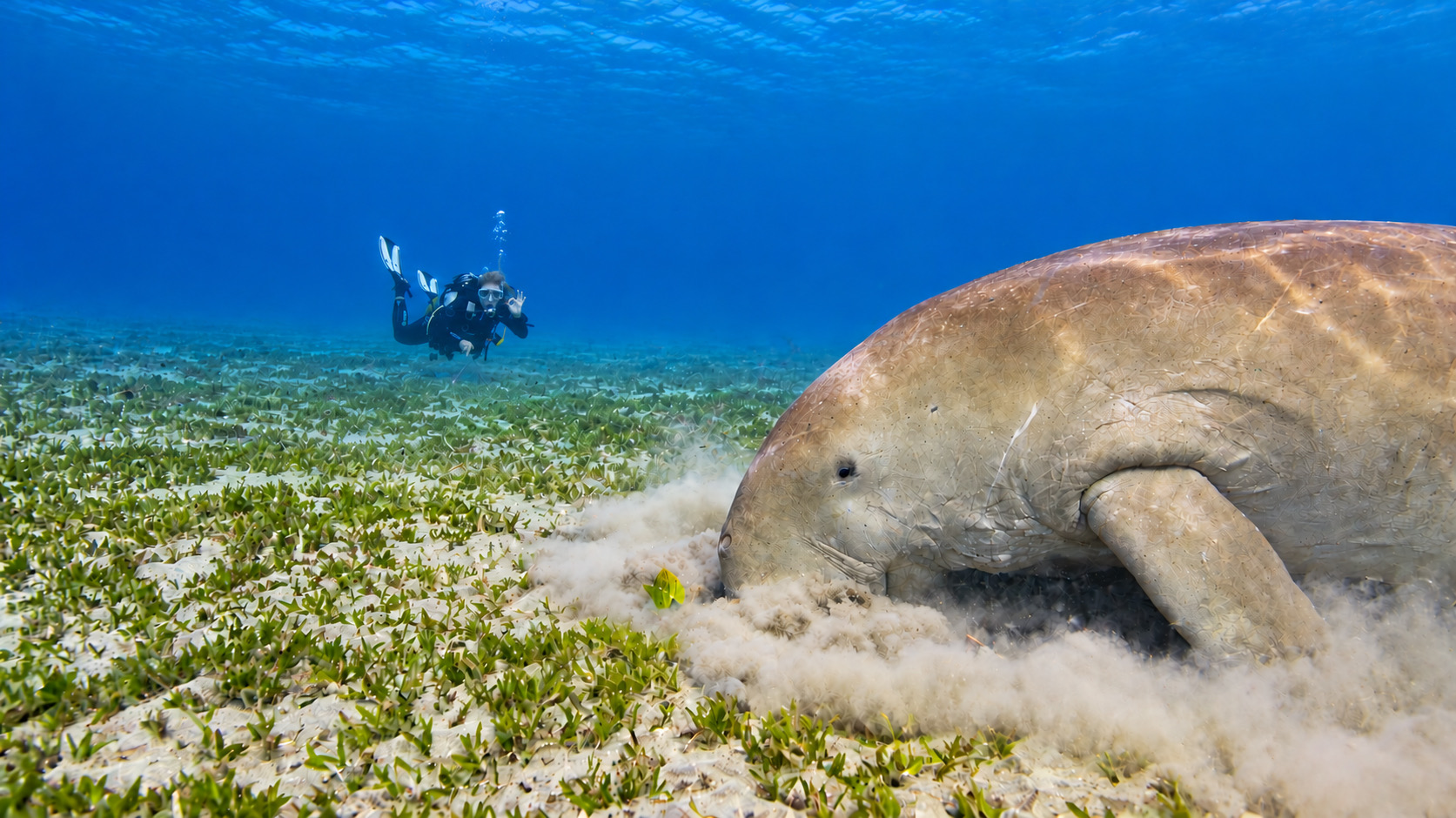
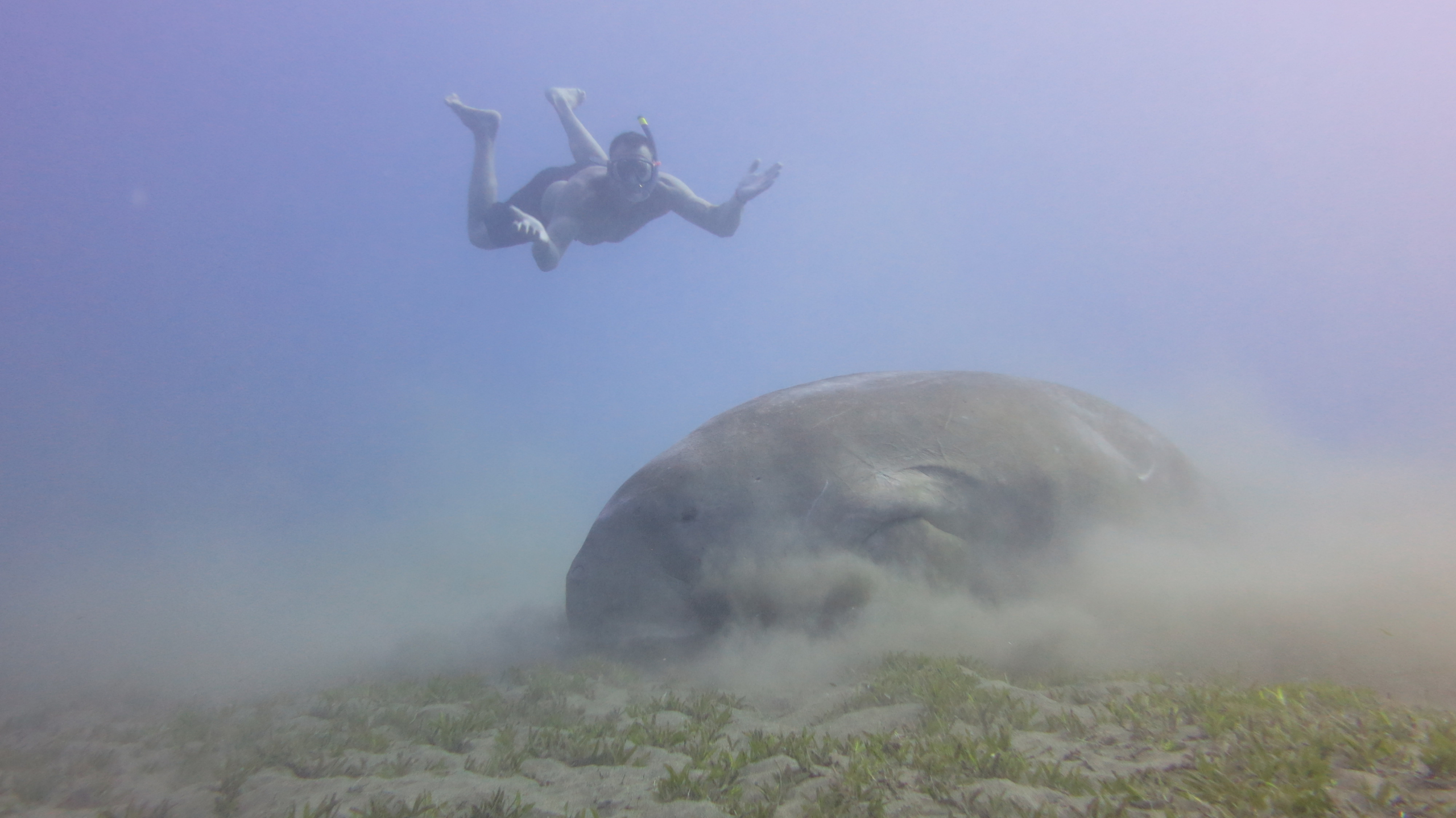
No research vessel gets as close as you do. Scientists spend months finding a single dugong – divers meet them every day. What used to vanish in dive logbooks now helps science.
Background
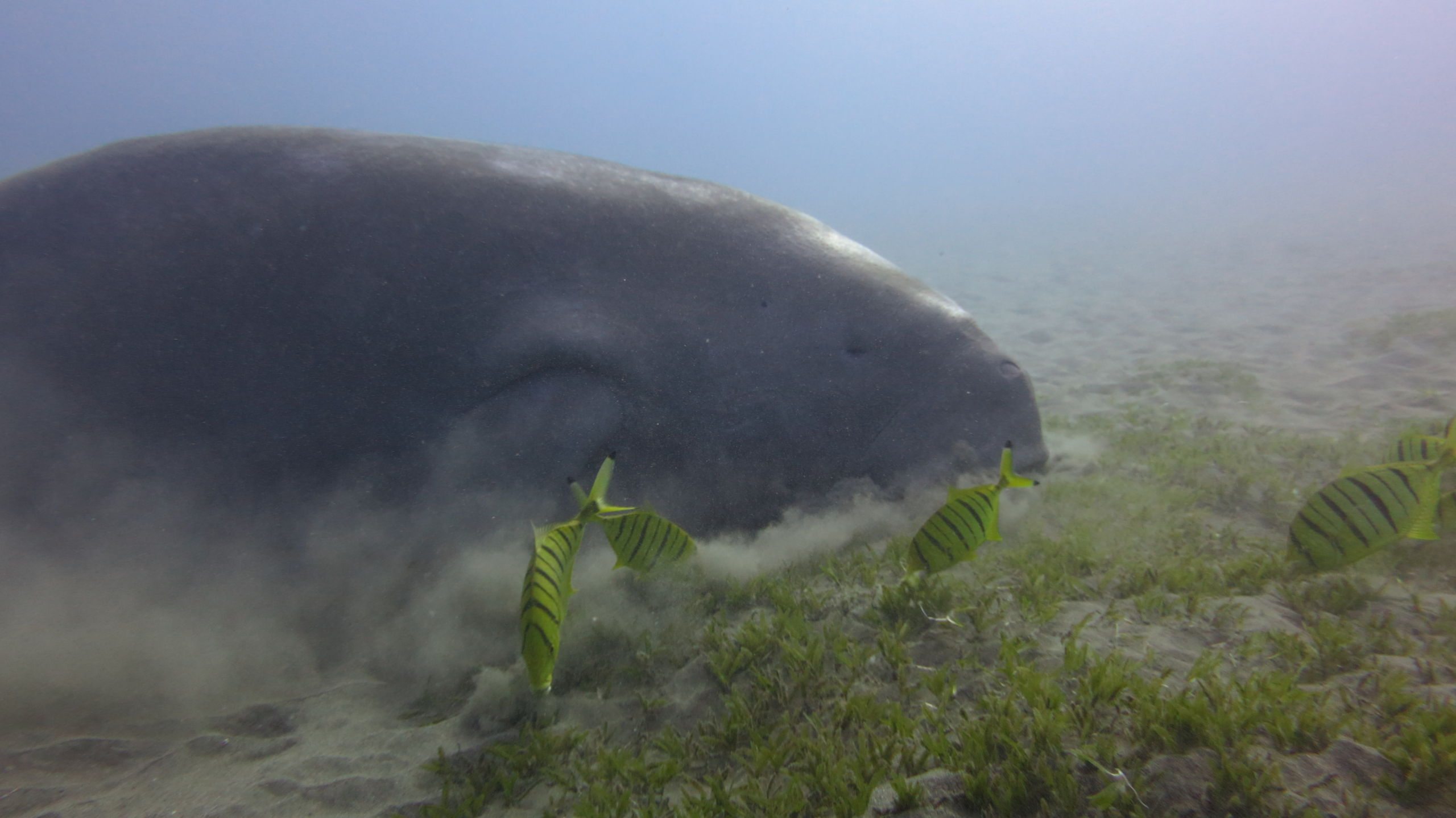
Why dugongs matter
The dugong is the only remaining species of the family Dugongidae. Its closest relative, Steller’s sea cow, was hunted to extinction in the 18th century. Today dugongs live in the shallow coastal waters of the Indo-Pacific – from the Red Sea via the Persian Gulf to Australia. The International Union for Conservation of Nature (IUCN) Red List classifies the dugong as “Vulnerable” worldwide. The East African coastal population, which includes the Egyptian dugongs, is even considered “Critically Endangered”. However, because accurate population data are lacking, it is difficult to make a reliable assessment.
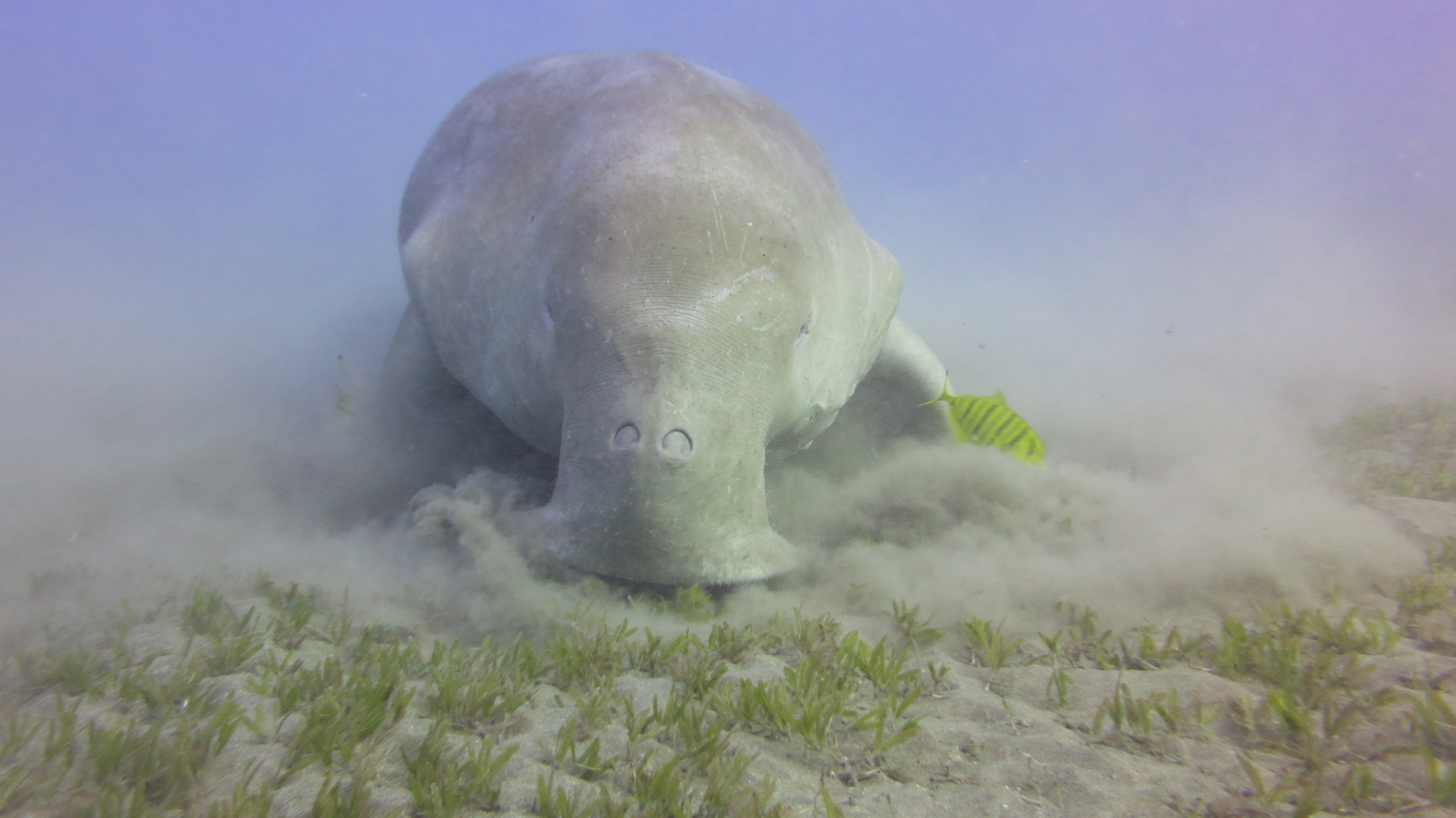
Dependent on seagrass
Dugongs feed almost exclusively on seagrass – and are gardeners of the sea themselves: their grazing promotes regrowth of meadows that are among the most effective carbon stores on Earth. When the seagrass goes, so do the dugongs.
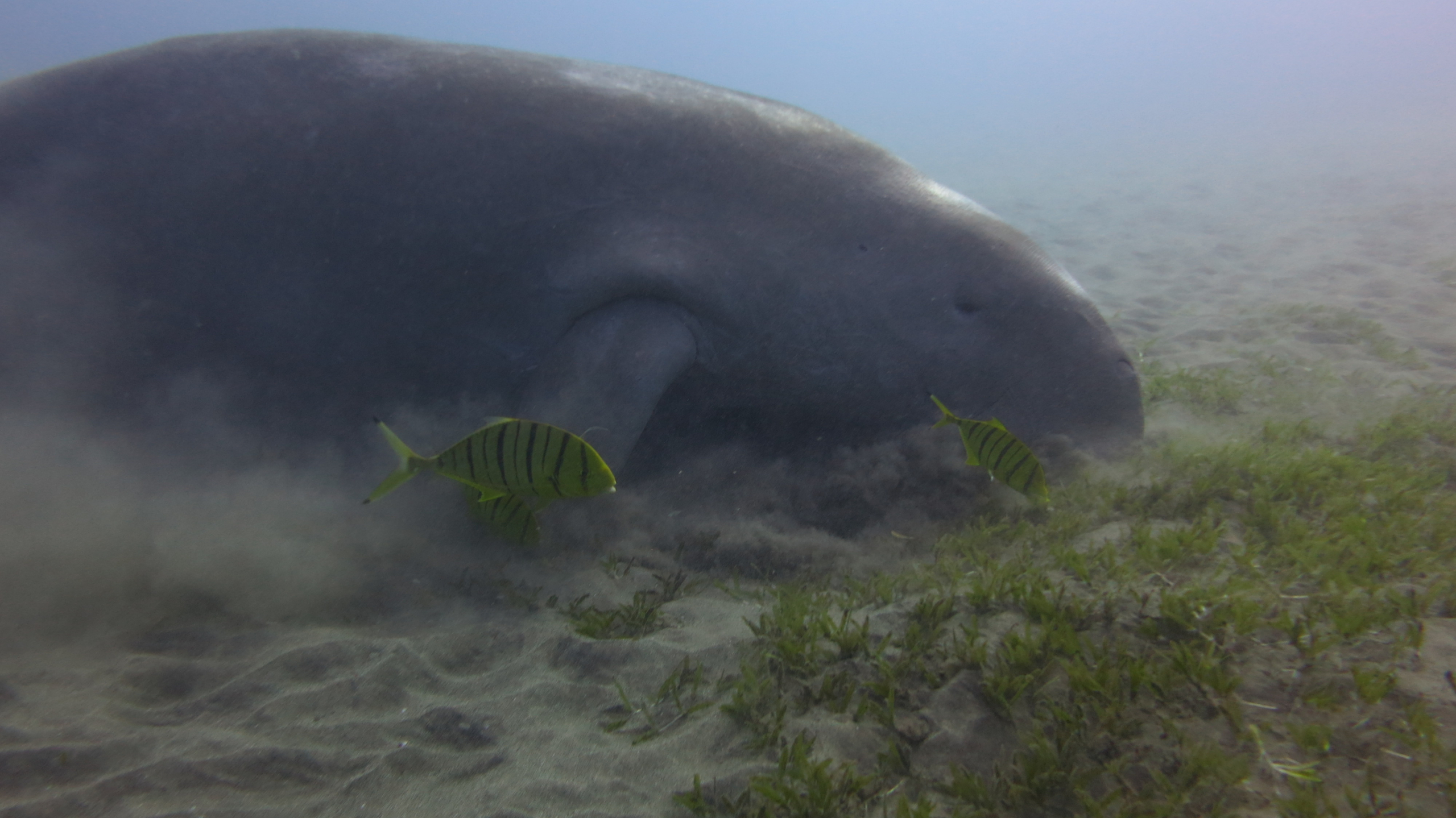
Identify individuals by photo-ID
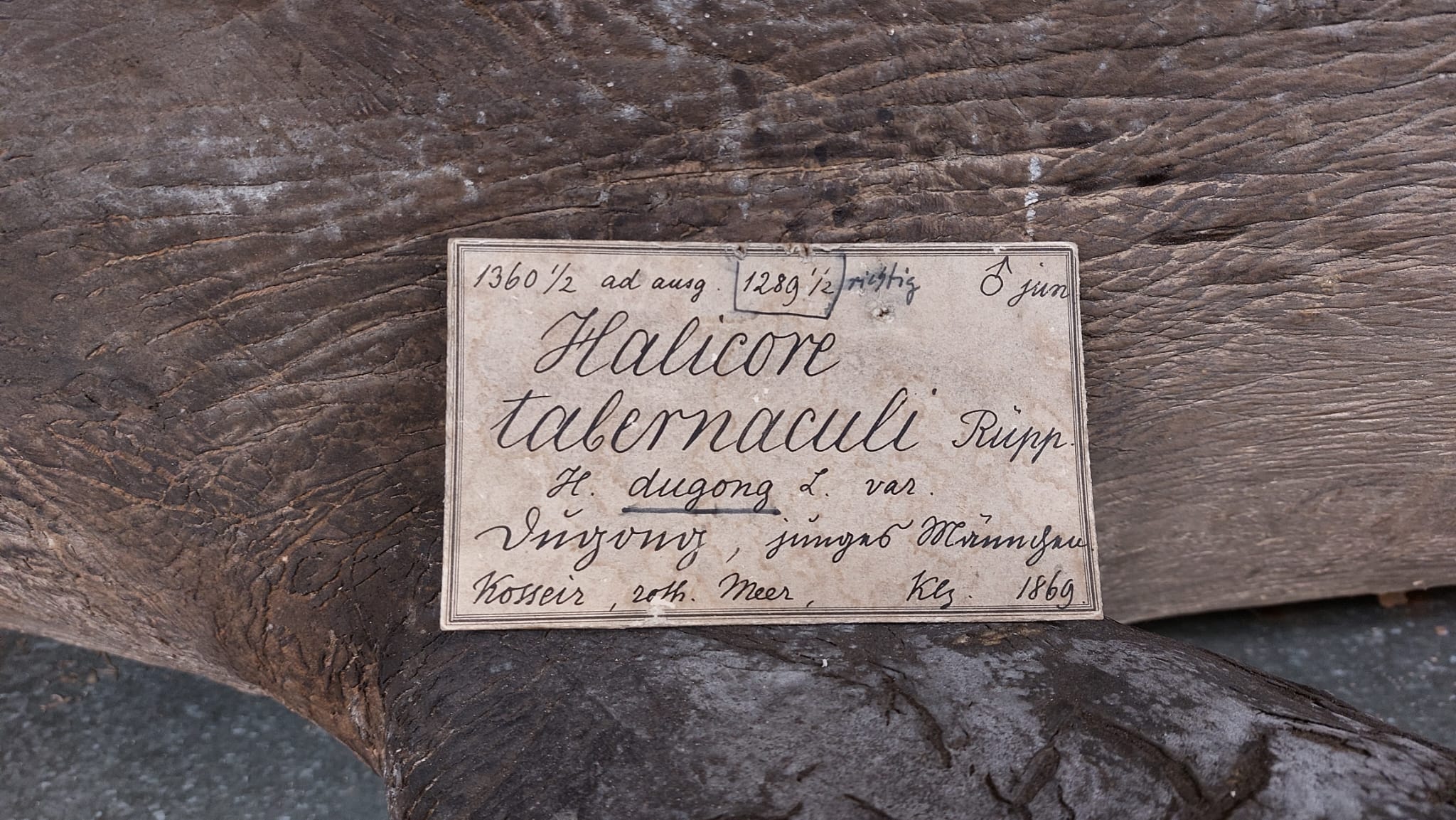
AI-assisted image analysis recognises scars and injuries and re-identifies individual animals.
DugongWatch in numbers
Dugongs can live for up to 70 years. They have their first calf only at around 10 years.
Body length of up to 3 metres, weight over 400 kg.
That is how few dugongs are estimated to remain along the Egyptian coast of the Red Sea (Hanafy et al., 2006).
have signed the UNEP/CMS Dugong MoU – an international, non-legally binding agreement under the Convention on Migratory Species (CMS) that promotes coordinated conservation for dugongs and their seagrass habitats.
The biggest threats to dugongs
Did you know?
Citizen science: many eyes see more
Citizen science means systematically involving volunteers in scientific data collection. DugongWatch brings this principle underwater: no research programme in the world can watch as many places at once as the diving community.
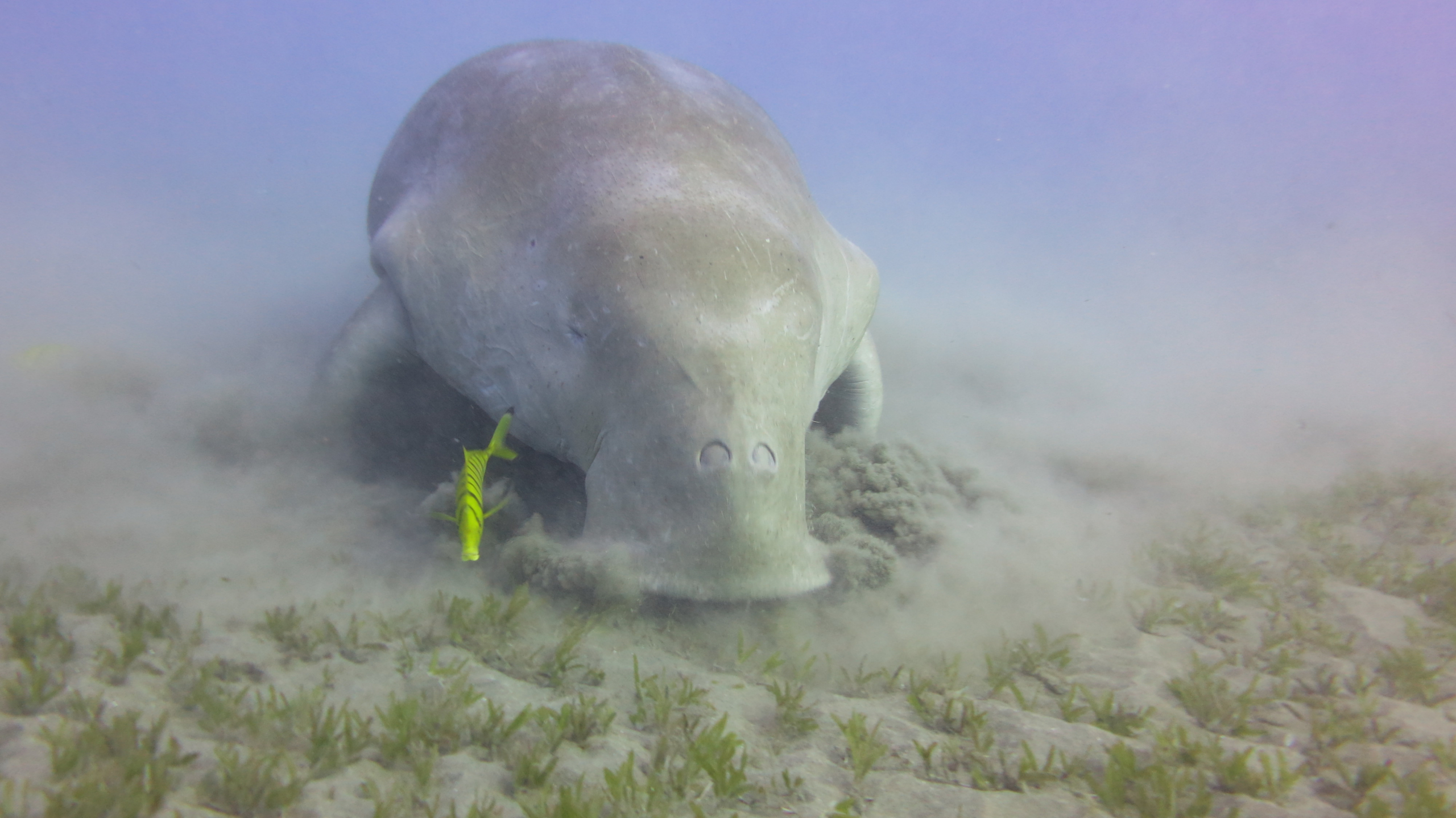
How we work scientifically
About the project
How to report a sighting
Dugongs are shy – and for divers and snorkellers one of the most extraordinary encounters underwater. With DugongWatch every sighting turns into a contribution to science. It’s easy – just use the app (available in 2027). Want to report a sighting right now? Send an email to info@dugongwatch.org.
- Open the app and sign in. Open DugongWatch and sign up. Signing up takes less than two minutes and requires only a few contact details.
- Tap “Report sighting” – the button is on the app’s home screen.
- Date and time: pick the date of your sighting from the calendar and add the time if you know it.
- Set the location: GPS automatically (“Use my location” – ideally right after the sighting), coordinates from your dive computer, or drop a pin on the map.
- Describe the animal: Adult or calf? Did the animal look injured? How many animals did you see?
- Upload a photo (recommended). Even blurry or dark shots are valuable – the AI can extract individual features from poor photos.
- Comment (optional): behaviour, depth, anything unusual – every extra detail can help.
- Submit. Tap “Submit sighting”. You get a confirmation and see your sighting on your personal map.
Rather upload than write an email?
Simply send us your photos and videos right here on the website. Location, date, name and a comment are optional.
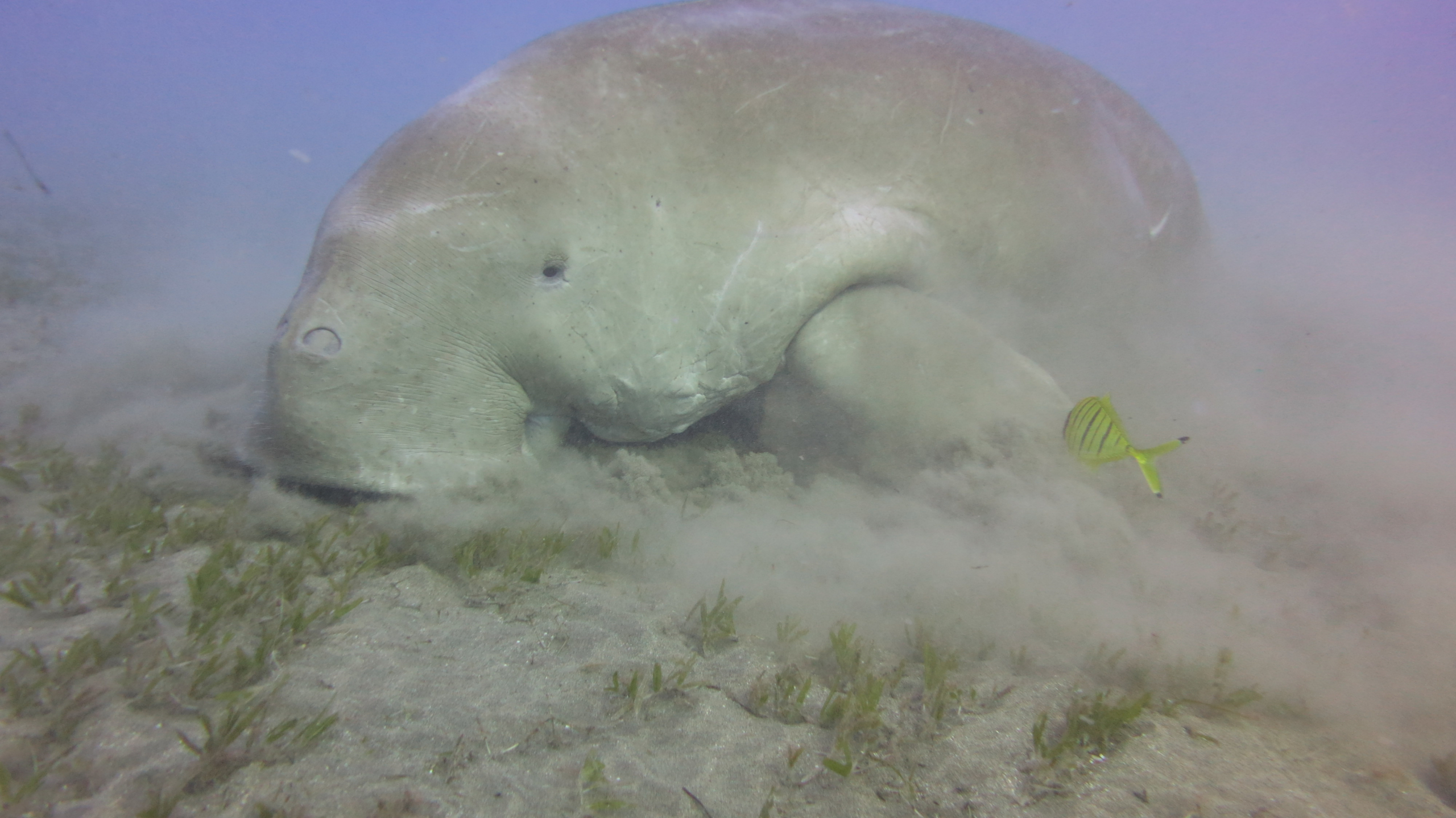
What makes a good photo?
Code of conduct for divers
Dugongs are protected wild animals. These rules protect them – and help ensure they keep letting people come close. Draft – please review and complete before publishing.
More rules in detail
Act together
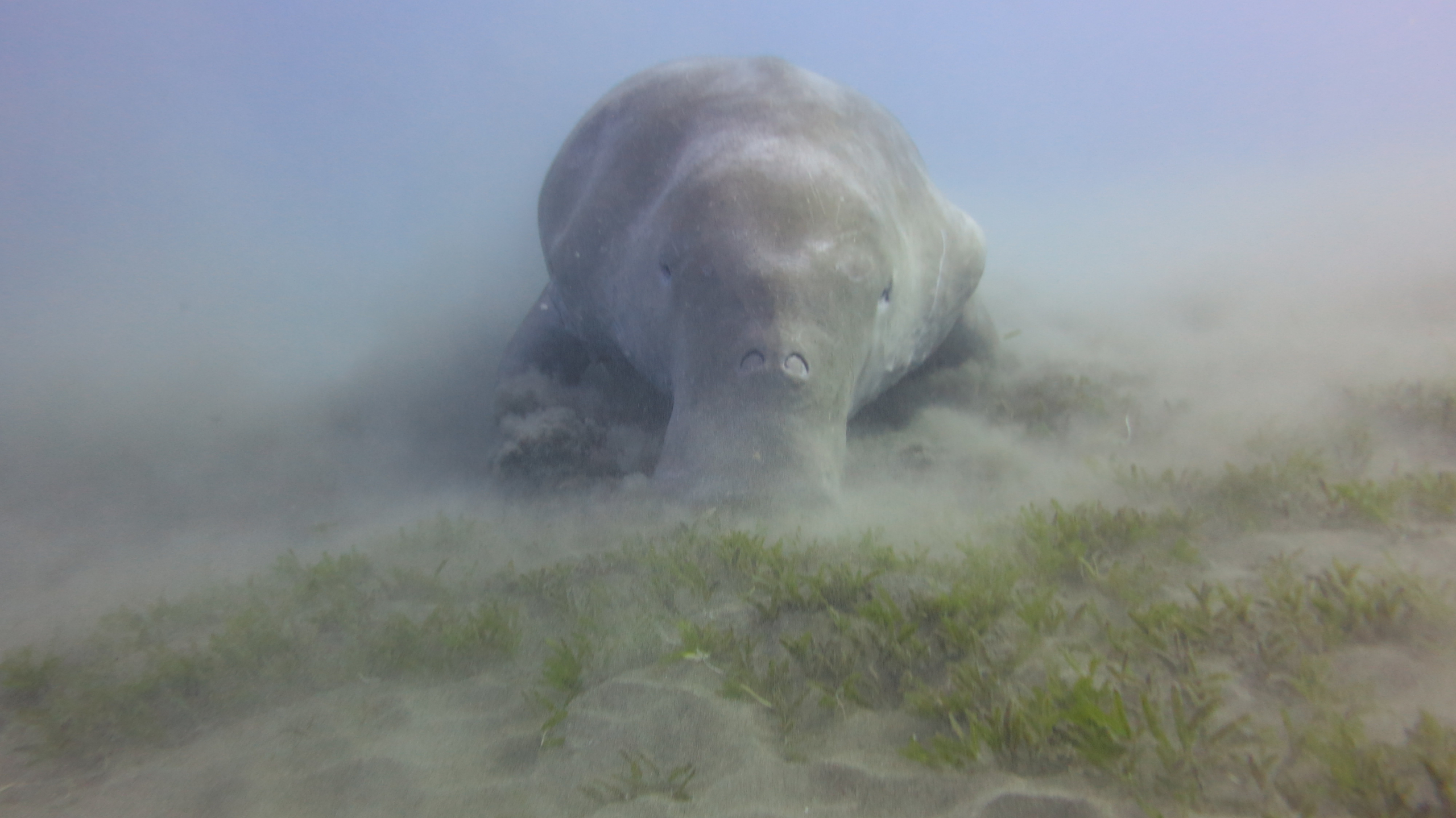
Help us count – and protect – the last dugongs of the Red Sea.
DugongWatch is a project of aquatil gGmbH and depends on funding. Every donation pays for servers, AI image analysis and briefing material for dive centres. Donations go to aquatil gGmbH.
You will be redirected to the secure payment page of Stripe or PayPal.
Prefer a bank transfer? aquatil gGmbH · Kreissparkasse Tübingen
IBAN DE84 6415 0020 0004 3672 20 · BIC SOLADES1TUB
For a German donation receipt please enter your name and address in the donation form.
Follow DugongWatch
Latest posts from Facebook and Instagram.